The Mystery of Gunung Padang Remains an Open Scientific Debate
The Mystery of Gunung Padang Remains an Open Scientific Debate
CIANJUR, West Java, Indonesia, July 26, 2026 — Gunung Padang, located in Cianjur Regency, West Java Province, Indonesia, continues to attract international attention as researchers seek to determine its true age, origin, and purpose. While the archaeological site has inspired numerous theories, scientists emphasize that many claims surrounding Gunung Padang remain unproven and require further scientific investigation.
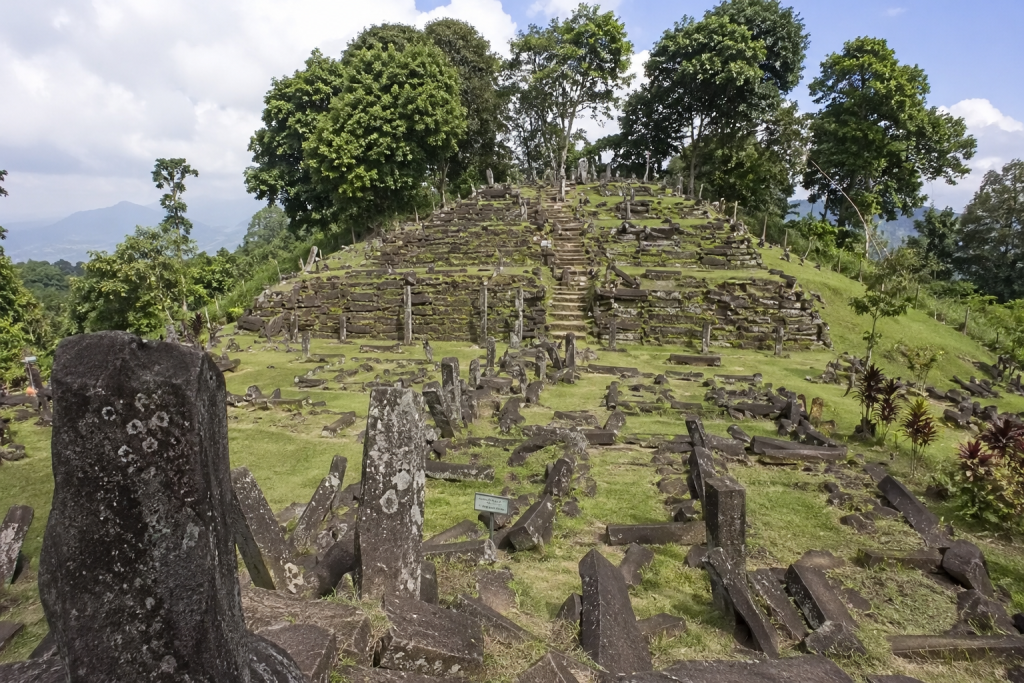
Recognized as the largest known megalithic site in Indonesia and one of the most significant in Southeast Asia, Gunung Padang is situated approximately 120 kilometers southeast of Jakarta, the capital of Indonesia. The site consists of a series of stepped terraces built from thousands of naturally occurring andesite column stones.
According to archaeological research, the visible structures at Gunung Padang are generally believed to date to Indonesia’s megalithic period, approximately 2,500 to 1,500 BCE. These findings are supported by years of archaeological surveys and excavations conducted by Indonesian researchers.
Scientific debate intensified after several geological studies proposed that deeper layers beneath the site could be significantly older than the surface structures. The studies suggested the possibility that Gunung Padang may contain buried human-made constructions dating back much earlier than previously thought.
However, this hypothesis has not been accepted as a scientific consensus. Archaeologists, geologists, and other researchers maintain that additional excavation, stratigraphic analysis, radiocarbon dating, and independent peer-reviewed research are necessary before definitive conclusions can be drawn. As of today, there is no internationally accepted scientific evidence confirming that Gunung Padang is the world’s oldest pyramid or the oldest known human-made structure.
In 2023, an international scientific paper presenting claims of an exceptionally ancient construction at Gunung Padang received worldwide attention. The journal later retracted the publication after concerns were raised regarding its methodology and interpretation of the data. The retraction does not prove the hypothesis is incorrect, but it indicates that the evidence presented did not meet the scientific standards required for publication.
Despite the ongoing debate, Gunung Padang remains an important archaeological and cultural heritage site in Indonesia. It has been designated as a National Cultural Heritage Site and continues to be the subject of multidisciplinary research involving archaeology, geology, geophysics, and other scientific fields.
Researchers agree that Gunung Padang still holds many unanswered questions. However, any conclusions regarding its age, construction, or historical significance must be based on verifiable archaeological evidence, transparent scientific methods, and findings that can withstand independent peer review.
As research continues, Gunung Padang remains one of the world’s most fascinating archaeological sites, illustrating how scientific understanding evolves through rigorous evidence, open inquiry, and continued exploration.
Editorial Desk: MuhammadAriLaw News.