
Student Protests in India’s Bihar Renew Global Debate on Transparency, Public Trust, and Education Reform
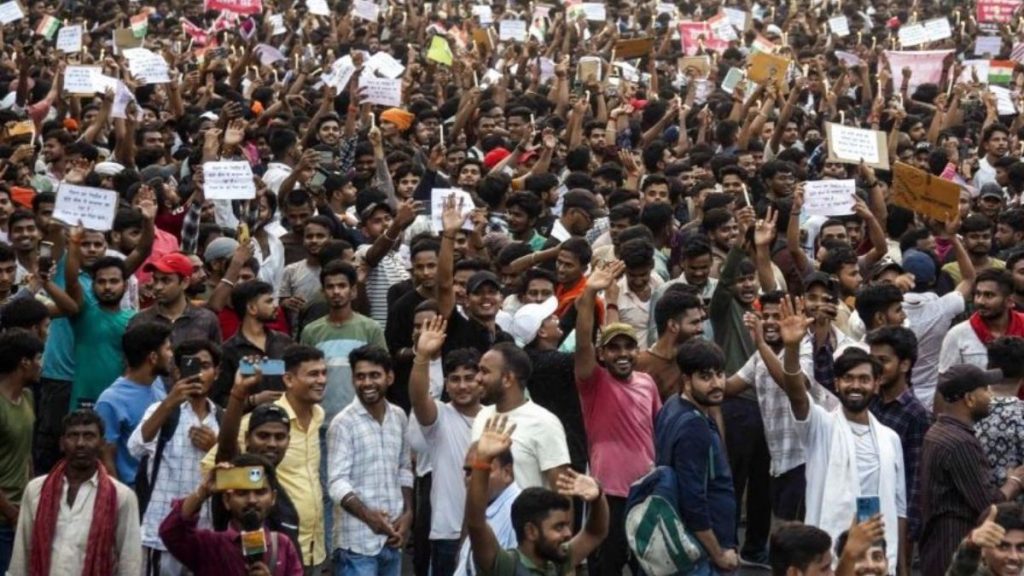
Student protesters gather during demonstrations in Patna, Bihar, India, July 2026.
Student Protests in India’s Bihar Renew Global Debate on Transparency, Public Trust, and Education Reform
July 25, 2026 | Politics & Society Desk
A wave of student-led demonstrations across the Indian state of Bihar has once again placed education, government accountability, and institutional transparency at the center of public debate. The protests, held under the banner of Bihar Bandh, have attracted national attention after thousands of students, youth organizations, and civil society groups voiced concerns over the integrity of India’s public examination system.
The demonstrations were organized by student organizations, including the All India Students’ Association (AISA) and several youth groups, following renewed public concern surrounding the handling of the National Eligibility-cum-Entrance Test (NEET) examination controversy. Protest organizers argue that confidence in public institutions depends not only on fair examinations but also on transparent investigations and effective administrative accountability.
Authorities deployed additional police personnel in Patna and several districts across Bihar ahead of the demonstrations. Security measures were introduced to minimize disruption to public transportation, government offices, and commercial activities while ensuring that public demonstrations remained peaceful. Local media also reported temporary traffic disruptions and preventive detentions involving several protest organizers before the scheduled rallies began.
Although the immediate focus of the protests centers on examination governance, analysts note that the movement reflects broader concerns about institutional credibility. For many students, competitive examinations represent more than academic assessments—they determine access to higher education, professional careers, and future economic opportunities. Any perception that examination processes lack transparency can therefore affect public confidence in government institutions responsible for education and recruitment.
Education specialists have long argued that maintaining the integrity of national examinations requires robust security systems, transparent investigative procedures, technological safeguards, and clear accountability mechanisms. As digital technologies become increasingly integrated into examination systems, governments worldwide continue investing in cybersecurity, identity verification, and anti-fraud measures designed to strengthen public trust.
The demonstrations in Bihar also illustrate how student movements increasingly influence broader discussions about governance. Around the world, universities have become important spaces where debates surrounding public accountability, anti-corruption initiatives, equal opportunity, and democratic participation continue to develop. While the specific issues differ between countries, education frequently serves as a catalyst for wider conversations about institutional reform and public policy.
Government officials have appealed for calm while emphasizing their commitment to maintaining law and order during the demonstrations. Protest organizers, meanwhile, have stated that their objective is to encourage policy improvements through peaceful civic participation rather than confrontation. The situation remained under close observation throughout the day as authorities monitored developments across multiple districts.
Political observers believe the outcome of these demonstrations could influence future discussions on examination security and education governance in India. Regardless of the immediate policy response, the protests have highlighted a recurring challenge faced by governments around the world: maintaining public confidence in institutions that oversee education, recruitment, and equal opportunity.
The events in Bihar also reinforce a broader lesson extending beyond India’s borders. In many democratic societies, education policy has become increasingly intertwined with questions of transparency, accountability, and public trust. As governments continue modernizing public services through technology, demands for stronger oversight and institutional integrity are expected to remain central to political and social discourse.
Reporting by MuhammadAriLaw News
Sources: Public statements from protest organizers and government authorities, reporting by The Economic Times, and publicly available information regarding the Bihar Bandh demonstrations on July 25, 2026.