
China Unveils Major Liquidity Injection to Support Financial Stability Amid Global Economic Uncertainty
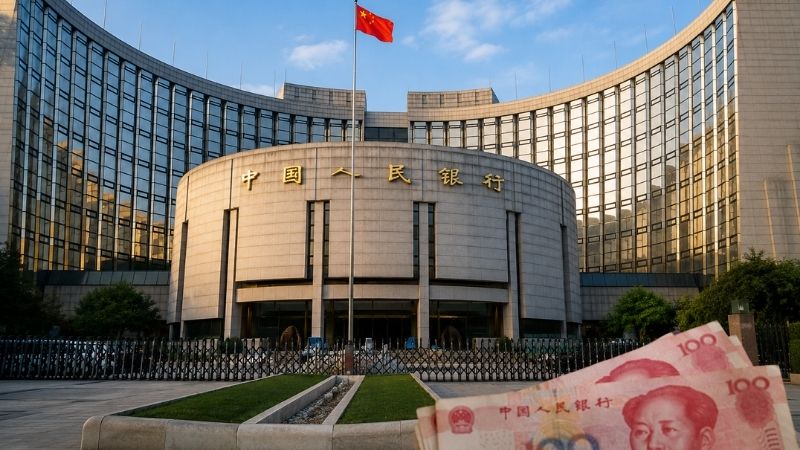
China Unveils Major Liquidity Injection to Support Financial Stability Amid Global Economic Uncertainty
July 25, 2026 | Public Policy Desk
China has announced a significant monetary policy measure aimed at maintaining financial stability as policymakers respond to growing uncertainty in the global economy. The People’s Bank of China (PBOC), the country’s central bank, confirmed that it will inject 2.1 trillion yuan into the banking system through a series of overnight reverse repurchase (reverse repo) operations scheduled between late July and early August 2026.
The initiative is designed to ensure that commercial banks have sufficient short-term liquidity to meet market demand while preserving stability across China’s financial system. Central bank officials stated that the operations are intended to address temporary funding needs and improve the efficiency of monetary policy implementation without signaling a major shift in the country’s broader economic strategy.
Reverse repo operations are among the primary monetary policy tools used by central banks to regulate liquidity. Through these transactions, the central bank temporarily purchases securities from financial institutions with an agreement to sell them back at a later date. The mechanism increases the amount of cash available in the banking system while allowing policymakers to withdraw liquidity once market conditions normalize.
According to the PBOC, the liquidity injections will be conducted over several trading days, including 600 billion yuan per day from July 29 through July 31, followed by an additional 300 billion yuan on August 3. The operation utilizes a recently introduced overnight liquidity facility intended to provide greater flexibility in responding to short-term market fluctuations.
The announcement comes at a time when governments and central banks around the world continue navigating a complex economic environment shaped by geopolitical tensions, volatile energy prices, inflationary pressures, and slowing global trade. These factors have prompted monetary authorities in many countries to balance economic growth with financial stability while avoiding excessive market volatility.
Economists note that liquidity management has become an increasingly important aspect of public policy. Adequate liquidity helps banks maintain lending activities, supports businesses seeking financing, and contributes to confidence in financial markets. While liquidity injections do not necessarily represent economic stimulus, they are widely viewed as precautionary measures designed to prevent temporary funding shortages from disrupting broader economic activity.
Financial analysts also interpret the latest announcement as part of China’s continuing effort to modernize its monetary policy framework. Over recent years, Chinese authorities have introduced new market-based instruments intended to improve the transmission of monetary policy while aligning certain operational practices more closely with international central banking standards.
The policy decision has attracted international attention because China remains one of the world’s largest economies and an important contributor to global trade and manufacturing. Changes in Chinese monetary policy often influence international financial markets, commodity prices, investor sentiment, and regional economic expectations.
Observers emphasize that the measure should be understood as a liquidity management operation rather than an indication of financial distress. Central banks routinely adjust liquidity conditions to ensure that payment systems function efficiently and that temporary fluctuations in money markets do not create unnecessary financial risks.
As policymakers continue monitoring domestic and international economic developments, investors will closely watch whether additional monetary measures are introduced during the second half of 2026. Future decisions are expected to depend on inflation trends, domestic economic activity, financial market conditions, and the broader international economic outlook.
The latest action highlights how modern public policy increasingly relies on proactive financial management to preserve economic resilience. In an interconnected global economy, timely liquidity measures have become one of the principal tools available to central banks seeking to maintain confidence, reduce systemic risk, and support sustainable economic growth without resorting to more aggressive policy interventions.
Reporting by MuhammadAriLaw News
Sources: People’s Bank of China (PBOC) announcement and Reuters reporting.